10 items tagged
Note on Bayesian Optimization Related to Gaussain Process model Philosophy Bayesian Optimization applies to black box functions and it employs the active learning philosophy. Use Case and Limitation BO is preferred in such cases
Motivation Major Reference Zeroth order optimization, or derivative free optimization is also known as the oracle problem. It’s nothing new to optimization community. Interest in ZOO algorithm resurges partly because it could be used in black box adversarial attack, if the softmax probability is given; and it could also be used in optimization of experimental output; and it could also be used for many design problem as the result has a non-analytical relationship with the parameters.
Krylov Subspace, Lancosz Iteration, QR and Conjugate Gradient Motivation In practise, many numerical algorithms include iteratively multiply a matrix, like power method and QR algorithm. All these algorithms have their core connected to a single construct, Krylov subspace and a operation, Lancosz Iteration. So this note motivates to understand this core.
TOC {:toc} L-BFGS algorithm Motivation L-BFGS is one of the not so simple optimization algorithm that we may encounter in large scale optimization problems. Not so simple means it’s not simply a first order algorithm, and the deviation from that is well motivated by theoretical arguments. So this note target to understand this algorithm
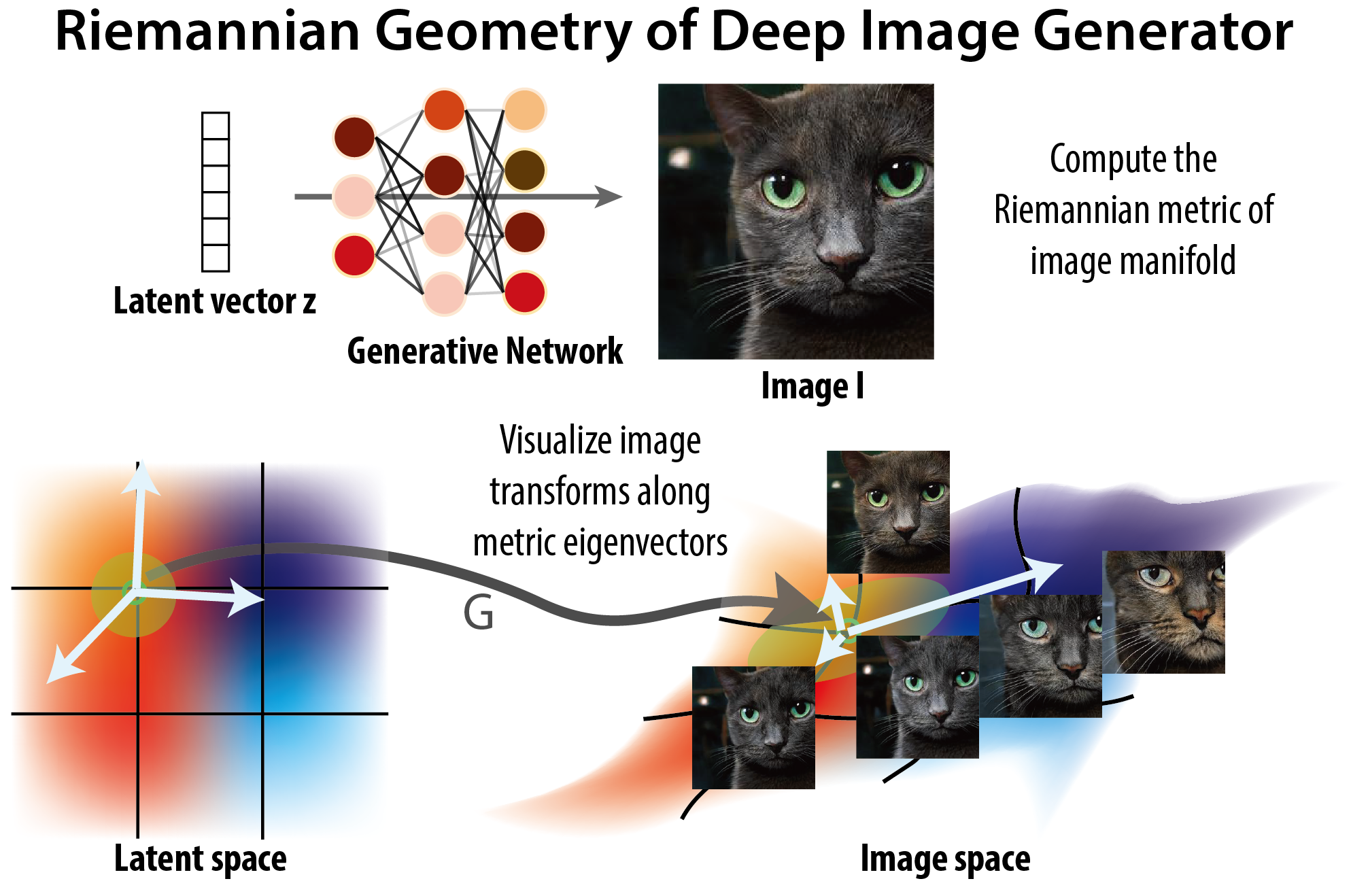
Note on Optimization on Manifold Manifold is locally similar to $\R^n$ flat space, but globally not. Manifold is locally homeomorphic to a Euclidean space of the same dimension. Besides there is Riemann logrithm map that connect the local vector space $T_p$ to the neighbourhood of $p$ on the manifold. Thus, many local optimization algorithm that work on flat $\R^n$ space can work the same on neighborhood of a manifold. The unique thing of working on a manifold is how to transport the local direction information in one neighborhood into another neighborhood.
Note on Feature Visualization Motivation We want to understand what the hidden units “represent” What are they tuned to? What’s the favorite stimuli? Why should we find the most excitable stimuli? Resources DeepDream.ipynb Tensorflow
TOC {:toc} Constrained CMA-ES Algorithm Target CMA-ES is originally used in unconstrained optimization. To adapt it into constrained optimization and we have to handle the boundary in some way. So how could it handle this geometric boundary?
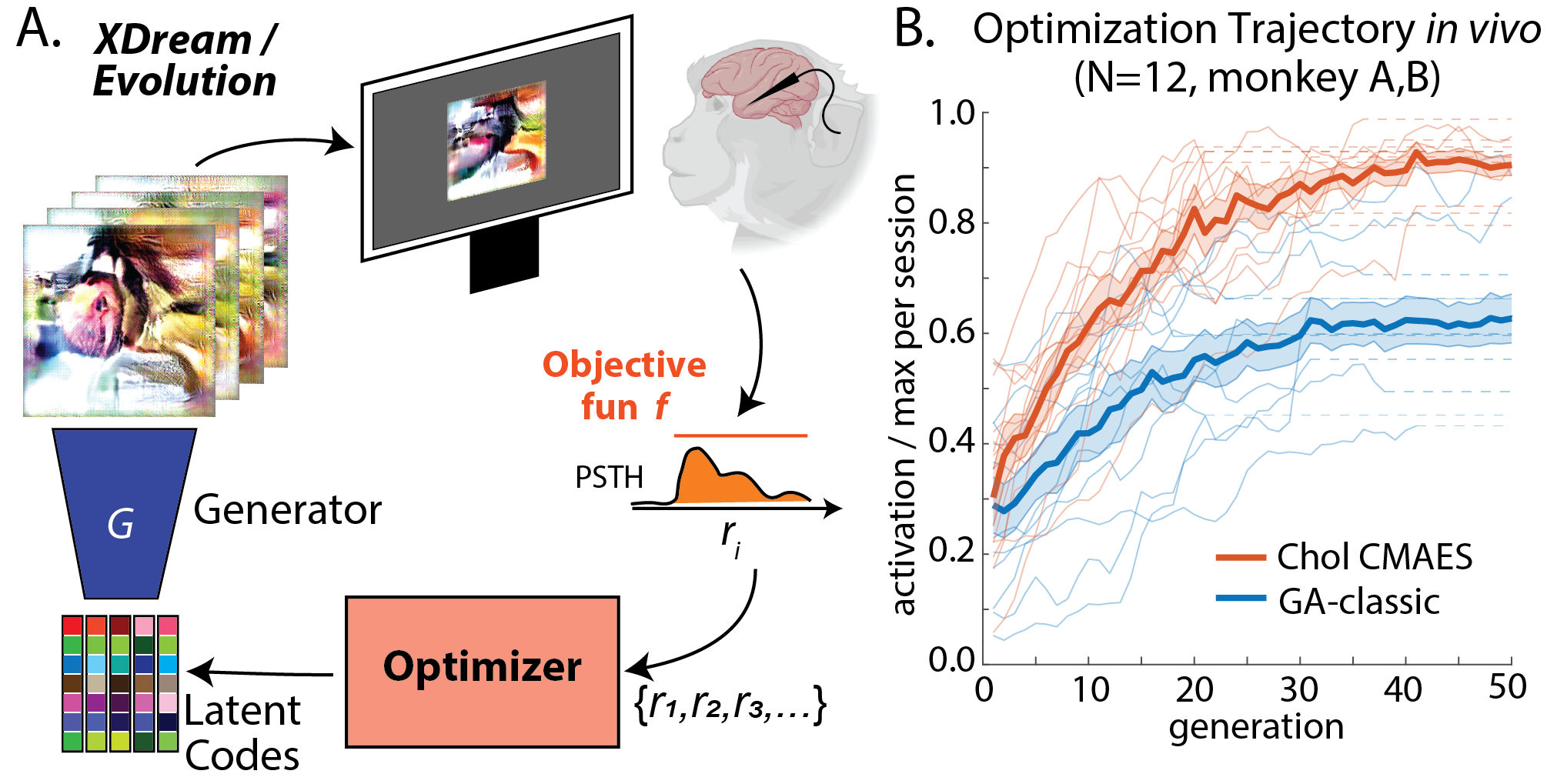
TOC {:toc} Task discription To find/generate the stimuli that evoked the strongest response of a neuron in a visual system is in essense an optimization problem. But the optimization task on hand has several unique features that are essential to the choice of optimization algorithms, for example,